Homosexual Eunuchs
Homosexual eunuchs are a normal and
natural part of God’s wonderful creation.
 |
Homosexual eunuchs
are loved by God.
Homosexual eunuchs? Here we examine the teaching of Jesus, Jews and ancient Roman Law about eunuchs. Matthew 19:3-12 gives us God’s view of hetero marriage and natural exceptions to hetero marriage as Jesus intended His disciples to understand them.
Did you know that some eunuchs were gay men and lesbians?
 |
Homosexual eunuchs were often physically intact gay men, lesbians and even transgendered people.
Bible teacher
The Ancient Roman and Talmudic Definition of Natural Eunuchs presents proof that gay men in ancient times were natural eunuchs, physically intact, capable of procreation yet not interested in women. This truth was codified in Roman law.
John MacArthur admits the link to Lev 18:21-22 when he writes:
“Judah’s syncretistic worship was reflected in the practice of swearing by the Lord and, at the same time, by Milcom, who may be either the Ammonite deity of 1 Kings 11:5, 33 or Molech, the worship of whom included child sacrifice, astrology and temple prostitution (cf. Lev. 18:21; 2 Kings 17:16; Ezek 23:37; Amos 5:25, 26; Acts 7:40-43).”
The MacArthur Bible Commentary, John MacArthur, Thomas Nelson Publishers, 2005, p. 1038.
A MacArthur sermon
“And the pagans, of course, commonly made eunuchs and many parents even mutilated their children to prepare them for service to the idols. And this was always a Satanic practice.”
MacArthur continues: “I would just add as a footnote that God offers grace to such people. According to Isaiah 56 verse 3,
“Neither let the son of a foreigner that hath joined himself to the Lord speak saying, The Lord hath utterly separated me from His people, neither let the eunuch say, Behold I’m a dry tree.”
In other words, if you’ve done this, you don’t have to be totally despairing,
“For thus saith the Lord unto the eunuchs that keep My sabbath and choose the things that please Me and take hold of My covenant, even unto them will I give in Mine house and within Mine walls a place and a name better than a name of sons and daughters and I will give them” and I love this, “an everlasting name that shall not be cut off.”
That’s pretty practical. You may cut some things off, [castration] but you’ll never cut that everlasting name off if they come to Me in faith. So God offers grace to the transsexual or the eunuch.”
John MacArthur’s online sermon about: the sin of homosexuality. Gay Christian teaching about homosexual eunuchs is historically accurate. We trust that Pastor MacArthur will acknowledge this truth.
Dr. Robert Gagnon admits the truth
Dr. Robert Gagnon, a leading anti-gay speaker and writer, is Professor of Theology at Houston Baptist University.
First admission: Leviticus 18:22 and 20:13 are in the context of temple prostitution.
“I do not doubt that the circles out of which Lev 18:22 was produced had in view homosexual cult prostitution, at least partly. Homosexual cult prostitution appears to have been the primary form in which homosexual intercourse was practiced in Israel.” The Bible And Homosexual Practice, p. 130.
Second admission: “Probably “born eunuchs” in the ancient world did include people homosexually inclined, which incidentally puts to the lie the oft-repeated claim that the ancient world could not even conceive of persons that were congenitally influenced toward exclusive same-sex attractions.”
Robert Gagnon’s Answers to Emails has the above quote 4/5 of the way down the page identified as a January 7, 2007 entry, at the link given above. Our teaching about homosexual eunuchs is factually and historically accurate.
Based on MacArthur’s and Gagnon’s remarks and The Ancient Roman and Talmudic Definition of Natural Eunuchs, we say that our gay Christian viewpoint is NOT private interpretation nor is it homosexual eunuchs trying to alibi our ‘sinful’ choices. Our views are historical facts which honor God.
Jesus said some homosexual eunuchs
are born that way,
from their mother’s womb.
According to Jesus in Matthew 19:3-12, eunuchs are not sick nor are they diseased nor are they in need of healing. Nothing in Matthew’s gospel and nothing in Jesus’ words indicates that eunuchs need to be fixed or repaired or restored to an honorable position in Jewish society. Instead, Jesus holds up eunuchs as examples to emulate – they already hold an honored place in Jewish society.
Contrary to the scenario in Isaiah 56:3-8, where the righteousness of God will be revealed and where eunuchs are promised future restoration to a place of honor in Jewish society, seven hundred years after Isaiah, Jesus elevates eunuchs by holding them up as already in a place of honor.
Throughout His earthly ministry, Jesus graciously heals the lame and the blind, people sick with fevers, people with leprosy and people with issues of blood. He even casts out devils and raises the dead and in every case, the people Jesus healed resume their normal place in society.
Born eunuchs are part of God’s plan. Lesbians, gays and transgendered people are part of the group known as eunuchs in ancient times. We do not need healed and we do not need to become heterosexual to be pleasing to God or to serve God – homosexual eunuchs can serve the LORD with gladness as born again Christians in the body of Christ.
What Jesus didn’t say
It is interesting to note that Jesus does not state or imply that born eunuchs exit the womb with deformed genitals. Instead, Jesus carefully distinguishes between born eunuchs and eunuchs who have been physically castrated, whether by illness or by men.
Jesus makes a further distinction between born eunuchs and eunuchs who make a personal choice to voluntarily abstain from sexual relationships for the kingdom of heaven’s sake.
The distinctions so carefully articulated by Jesus, inform us that born eunuchs are not required to abstain from sexual relationships such as gay marriage. Abstinence from sexual relationships particularly describes the third class of eunuchs and possibly the second class but not the first class, whom Jesus referred to as born eunuchs.
This distinction becomes important when confronting Complementarian assertions that limit marriage to the Adam and Eve marriage paradigm. God does not assert that limitation in scripture. Instead, Jesus carefully exempts eunuchs from the Adam and Eve marriage paradigm. Eunuchs, according to Jesus, cannot receive His saying about Adam and Eve style marriage.
“He that is able to receive it,” [Jesus’ statement about marriage] “let him receive it.” 19:12.
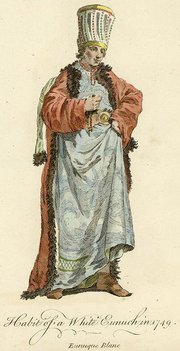
Jesus Recognized Three Kinds
Of Eunuchs – Matthew 19:11-12
 |
- Eunuchs so born from their mother’s womb. These eunuchs, according to Jesus, were born that way. They did not make a personal choice to be eunuchs and they were not physically castrated by men. The group known as born eunuchs includes homosexual eunuchs or gay eunuchs, lesbians and transgender or gender non-conforming people. What these folks had in common with eunuchs is that, in general, they did not reproduce.
- Eunuchs made so by men via physical castration. These eunuchs were physically castrated and could not consummate marriage.
- Eunuchs who made a personal choice to be eunuchs, by abstaining from marriage, for the sake of the kingdom of heaven, what some refer to as metaphysical eunuchs. Jesus distinguishes the third class of eunuchs, who made a choice to be eunuchs, from the first class, who did not make a choice to be eunuchs.
According to Jesus, born eunuchs are exempt from the Adam and Eve style heterosexual marriage paradigm. Traditionalists read into that exemption that all eunuchs must therefore be celibate, an assertion Jesus was careful not to make.
The important point about eunuchs isn’t that they never married. Some eunuchs did marry and ancient Roman law made provision for some eunuchs to marry. What set eunuchs apart was that they tended not to reproduce unless they were slaves and their Roman masters used their reproductive ability to make money by selling their children or using them as slaves.
Jesus did NOT prohibit gay marriage.
for born eunuchs in Matthew 19:11-12. To read a prohibition of gay marriage into the passage, when the passage does not say that, is to go beyond what scripture says. It seems clear in Matthew 19:11-12, that Jesus did not expect homosexual eunuchs, born eunuchs, gay people, to abstain from loving committed same sex marriage relationships or gay marriage.
Is there room in Matthew 19:3-12, to allow homosexual eunuchs the right to legal gay marriage? I believe there is room. How do I arrive at that conclusion? In the passage, Jesus intentionally differentiates between born eunuchs and the class of eunuchs who voluntarily abstain from marriage.
Remember also that there is a strong analogy between polygamy in the Old Testament and gay marriage in the modern era. In the OT, polygamy was culturally accepted, was legal, Deuteronomy 21:15-17, Exodus 21:10-11, was recognized and blessed by God, 2 Samuel 12:7-8, 2 Chronicles 24:2-3 and was engaged in by some of the greatest followers of God and heroes of the faith, like Abraham, Genesis 16:3, 25:1-6, Jacob, Genesis 30:1-24, and King David, 1 Samuel 18:3, 20:8-17, 2 Samuel 3:2-5, 5:13, 12:7-8, 15:16, 16:21, 19:5, 20:3, 1 Chronicles 14:3.
In the modern era, gay marriage is culturally accepted, is legal, is recognized and blessed by God and is engaged in by many born again, washed in the blood of the Lamb Christians who are already in the body of Christ, Ephesians 1:23, who have already been given all spiritual blessings in Christ, Ephesians 1:3, who are already accepted in Jesus the beloved, Ephesians 1:6 and who are already seated in heavenly places in Christ Jesus, Ephesians 2:6.
The Testimony Of Roman Law
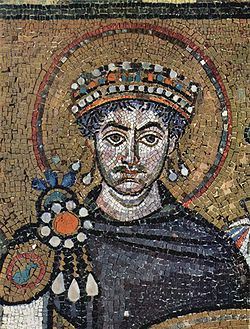 |
The Emperor Justinian,
AD 483-565, who codified Roman Law, from a mosaic at the Church of San Vitale, Ravenna, Italy
The Digest of Justinian, AD 483-565, ancient Roman law written in Latin, centered around the foremost Roman legal experts, Papinian, Ulpian, Paulus and Julian.
Emperor Justinian’s legal commission edited some fourteen hundred years of Roman law, consulting more than two thousand ancient law books, to produce The Digest of Justinian. The English translation of The Digest is four thousand pages long.

Roman law books
Ulpian’s legal commentaries are among the two thousand ancient books consulted by Justinian’s scholars and form the basis of one third of Justinian’s Digest.
Ulpian therefore, is the outstanding expert on Roman law. His legal opinions carry far more evidentiary weight than the contrary opinions of modern, anti-gay traditionalists.
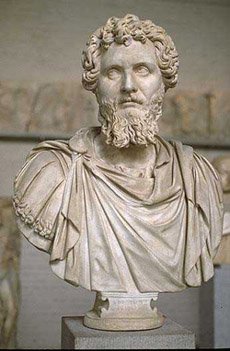 |
Ulpian, the Roman legal expert, defines eunuch, as ancient Romans understood the term.
Bust of Ulpian,
AD 172-223
“The name of eunuch is a general one; under it come [1] those who are eunuchs by nature [born eunuchs], [2] those who are made eunuchs [by castration or crushing], and [3] any other kind of eunuchs [those who voluntarily abstain from marriage].”
The Digest of Justinian, Vol. IV, University of Pennsylvania Press, Philadelphia, 1985, p. 944.
According to Ulpian and Roman Law, a eunuch is NOT always a castrated man
Some eunuchs are born eunuchs. No human being made a “born eunuch” into a eunuch by castrating him. Ulpian, the foremost Roman legal expert and the Roman Law itself, which was much older than Ulpian, and our Lord Jesus Christ, in Matthew 19:12, are in agreement that there are three classes of eunuchs.
The first class of eunuchs mentioned by Jesus and by Roman law, are natural eunuchs (born eunuchs), so born from their mother’s womb.
These born eunuchs or homosexual eunuchs were physically intact men, capable of reproducing but apparently not interested in sexual relationships with women. Should they be condemned to a life of celibacy?
St. Paul said it is better to marry than to burn” [in lust], 1 Corinthians 7:1-9. It seems nothing more than a matter of common decency and common sense that homosexual eunuchs or born eunuchs, should be allowed same sex marriage, to meet the companionship, emotional, physical, sexual and spiritual needs which are innate in all human beings.
Just as heterosexuals desire an orientation compatible marriage partner – a partner matching their sexual orientation – so gays and lesbians desire an orientation compatible marriage partner – a partner matching our sexual orientation. And by the grace and mercy of God, we have that legal right in the USA today.
Ancient Roman Law Is Clear – Some Eunuchs Were NOT Physically Castrated
“Where a woman marries a eunuch, I think that a distinction must be drawn between a man [a eunuch] who has been castrated and one [a eunuch] who has not, so that if he has been castrated, you may say that there cannot be a dowry; but where a man [a eunuch] has not been castrated, there can be a dowry and an action for it, because a marriage can take place here.”
The Digest of Justinian, Vol. 1, University of Pennsylvania Press, Philadelphia, 1998, Book XXIII.3.39.1.
 |
Old Lawbooks
Roman Law is clear – a eunuch was not always a castrated man.
Uncastrated eunuchs, what scripture and Roman Law describe as born eunuchs or natural eunuchs, (what some understand as homosexual eunuchs) were capable of marriage and were legally allowed to marry a woman.
If a man who was NOT castrated
could be considered a eunuch,
what made him a eunuch?
The common sense answer is: “His lack of desire for a woman, his inability to feel sexually attracted to women and in some cases, his repulsion from marrying a woman.” If a eunuch was a man who was not sexually interested in women, why would a eunuch decide to marry a woman?
- The first reason a born eunuch might marry a woman was to produce children for his master. Many eunuchs in the Roman empire in New Testament times were slaves. In the first century AD, slaves comprised one third of the population of Rome. If slaves could reproduce, their children could enrich the slave owner.
- Let’s be honest. Some gay men, what we might call homosexual eunuchs, have married and fathered children. Procreation did not change the innate sexual orientation of homosexual eunuchs. Heterosexual marriage did not change the innate sexual orientation of homosexual eunuchs.
- Some Roman slave owners were in the business of raising slaves like they raised farm animals. They compelled their slaves to legally marry so that the children were legitimate. Roman law viewed children born out of wedlock differently than it viewed children of a married couple. In ancient Rome, children of a legally married couple had more legal rights than children of an unmarried couple. A master might require his homosexual eunuch or gay slave to marry a woman to produce children. The slave would have little say in the matter.
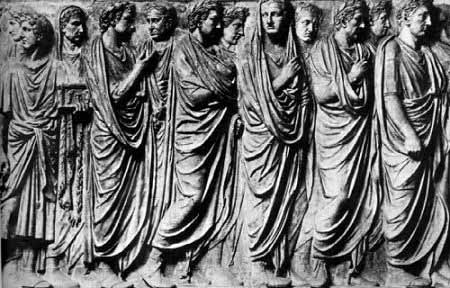
Roman Senators, bas relief in stone
The second reason a born eunuch might marry a woman is to fit in. Some eunuchs were free men. Perhaps a homosexual eunuch or a gay man in the Roman Empire tried to “pass” as heterosexual just like some gay men today try to pass. Perhaps gay men in the Roman Empire thought that fitting into “the heterosexual mold” was the safest way to live.
Heterosexuals sometimes opine that gay people constantly flaunt their sexual orientation. In the opinion of many heterosexuals, gay people should keep quiet about their sexual orientation and “just fit in.” Yet when we assert that perhaps a homosexual eunuch tried to “fit in by marrying a woman,” traditionalists immediately insist gay men would not have done that. Perhaps “fitting in” was what homosexual eunuchs who married women were attempting to do.
cure you of being gay.” So perhaps homosexual eunuchs in the ancient Roman Empire married a woman, only to discover that heterosexual sex and marriage did not cure them. Solomon told us there is nothing new under the sun. Human nature has not changed much from Roman times to modern times.
Roman Law said some eunuchs are
NOT diseased (not castrated)
Roman Law points out that those who sell slaves are required to inform purchasers of any disease or defect in the slave. Roman Law defined disease as an unnatural physical condition which impairs use of the body for the purposes for which it is intended. Those purposes can include procreation. Ulpian, in the Roman Law, then remarks on eunuchs.
“To me it appears the better view that a eunuch is not diseased, any more than one who, having one testicle, is capable of procreation.”
The Digest of Justinian, Vol. 1, Book XXI.1.7.
According to Ulpian, Roman Law did not view all eunuchs as diseased or defective. In other words, a born eunuch had not been castrated and did not suffer from genital deformity. Some eunuchs were capable of procreation yet were regarded differently than men who were not eunuchs.
What accounts for the difference? Could it be that the homosexual eunuch was not sexually attracted to women?
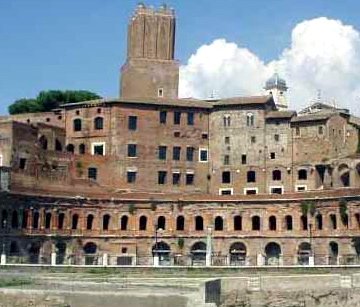 |
The Roman Senate House
Based on Roman Law, we understand that some eunuchs were capable of procreation. This procreative capability becomes important in the context of Roman slavery. Slaves who could reproduce enriched their masters by producing children. The statements about eunuchs in Roman law are in the context of slavery.
The New Testament was written in the Roman Empire. Jesus and the authors of the New Testament lived under Roman Law, therefore it is important to consider ancient Roman law on this issue.
Jesus, Ulpian and Roman Law
are more authoritative than
Greek Lexicons and Bible Dictionaries
For this reason, when Jesus, Ulpian and Roman Law define what a eunuch is, their definitions carry greater evidentiary weight than definitions in modern Greek lexicons or Bible Dictionaries. Homosexual eunuchs are a fact of history and a fact of life.
Ulpian, perhaps the most important human expert on Roman Law, reminds us that eunuchs are not always physically castrated men. Eunuchs by nature, according to Ulpian, are born that way, are physically intact and capable of procreation.
We have seen that, according to our Lord, Jesus Christ and according to Roman Law, all eunuchs were not castrated men. Our next page will examine ancient Jewish documents and ancient Christian preachers to see what they believed about eunuchs.
Additional Information
Gay Christian 101 – a great book?
The Ancient Roman and Talmudic
Definition of Natural Eunuchs
What was a sodomite
in the Bible?
From Homosexual Eunuchs, Return To
Gay Christian 101 Home Page
Google Translate
into 90 languages

We are saved:
by grace alone through faith alone
Recent Articles


-
Gay Christian 101 – Affirming God’s glorious good news for all LGBs.
Jan 08, 24 12:57 AM
 Gay Lesbian Bisexual Christian 101 – Accurate biblical and historical info defending LGB Christians from the anti-gay crowd.
 -
Romans 1 describes ancient shrine prostitution, not gays and lesbians.
Dec 21, 23 04:37 PM
 Romans 1, in historical context, is about ancient Roman fertility goddess worshipers who engaged in shrine prostitution to worship Cybele, not gays and lesbians.
 -
The Centurion And Pais – When Jesus Blessed A Gay Couple.
Nov 14, 23 10:32 PM
 Centurion and Pais? If Jesus blessed a gay relationship, would this change your view of homosexuality?
Bible Study Resources
for eDisciples