Malakoi is NEVER used in the Bible
to mean homosexual
Malakoi – The cultural historical religious
context of 1 Cor 6:9 is temple prostitution.
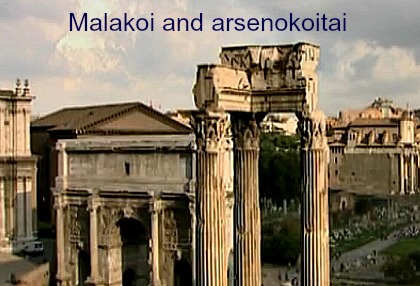
What do conservative anti-gay Calvinists
say about malakoi?
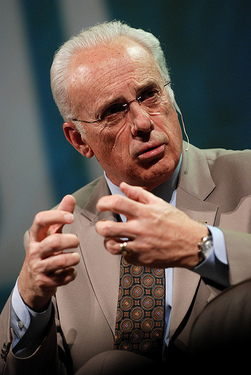
Conservative Calvinist Mega-Church Pastor, John MacArthur, admits the context of 1 Cor 6:9 was temple prostitution.
Describing Corinthian Christians in the first century AD, he writes:
“They also lived in a society that was notoriously immoral, a society that, in the temple prostitution and other ways, actually glorified promiscuous sex. To have sexual relations with a prostitute was so common in Corinth that the practice came to be called “Corinthianizing.” Many believers had formerly been involved in such immorality, and it was hard for them to break with the old ways and easy to fall back into them… it was also hard for them to give up their sexual immorality.”
The MacArthur New Testament Commentary, 1 Corinthians, John MacArthur, Moody Press, Chicago, 1984, p. 146.

Anti-gay Calvinist Phil Johnson admits the context of 1 Cor 6:9 was temple prostitution.
Pastor MacArthur’s Calvinist Co-worker, Phil Johnson, is
Executive Director of Grace To You, the audio/video ministry of Grace
Community Church, Sun Valley, CA, one of the most influential Calvinist
conservative, anti-gay mega-churches in the world.
Phil Johnson says: “At the heart of all the problems in the church at Corinth… a city filled with both temples and brothels—where fornication was literally deemed a religious rite…
The vast majority of the Jewish community in Corinth had rejected the gospel (Acts 18:6). So the church was made up of mostly Gentiles who, of course, came from a culture that was not inclined to see sexual sin as unspiritual. Just the opposite. Most of the “religion” in Corinth involved temple prostitution and debauched sexual behavior.”
-Phil Johnson on Pyromaniacs Blog, January 31, 2011.
Editor’s Note: I love it when our most ardent foes make unintentional arguments which support our gay Christian teaching on these important verses. Phil’s boss, John MacArthur, also agrees with us that the context of Leviticus 18:21-22 was shrine prostitution or temple prostitution. Thanks guys!
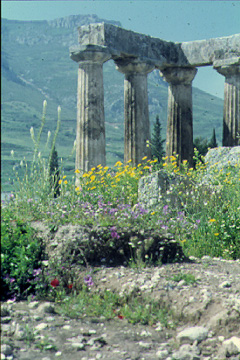
Wildflowers in the ancient
ruins of Corinth
The Greek word malakoi, which is the plural of malakos, and the Greek word arsenokoites are both used in 1 Cor 6:9.
Here is how the KJV translates 1 Corinthians 6:9.
“Know ye not that the unrighteous shall not inherit the kingdom of God? Be not deceived: neither fornicators, nor idolaters, nor adulterers, nor effeminate (malakoi), nor abusers of themselves with mankind, (arsenokoites)“ -1 Cor 6:9, KJV
Malakoi In 44 Translations
- The Apostle Paul – AD 55 – Greek – malakoi
- Wycliffe – 1380 – neische
- Wycliffe – 1388 – letchouris ayen kinde
- Tyndale – 1526 – weaklinges
- Martin Luther – 1534 – weichlinge
- Coverdale – 1535 – weaklinges
- Matthews – 1537 – weaklinges
- Great Bible – 1539 – weaklynges
- Swedish Version – 1541 – weaklingar
- Geneva Bible – 1560 – wantons
- Bishops Bible – 1568 – weaklinges
- Valera Spanish – 1602 – effeminados
- Rheims-Douay – 1609 – effeminat
- King James Version – 1611 – effeminate
- Portuguese – 1690 – efeminados
- Daniel Mace New Testament – 1729 – the effeminate
- Darby – 1884 – those who make women of themselves
- Darby French – 1885 – effemines
- Young’s Literal – 1898 – effeminate
- ASV – 1901 – effeminate
- Weymouth – 1903 – any who are guilty of unnatural crime
- Louis Segund French – 1910 – effemines
- Moffat – 1913 – catamites (boys who have sex with men)
- Lamsa Translation – 1933 – men who lie down with males
- New American – 1941 – sodomites
- Revised Standard – 1952 – sexual perverts
- Amplified – 1958 – those who participate in homosexuality
- NASB – 1963 – effeminate
- New American Bible – 1970 – boy prostitutes
- New English – 1970 – guilty of homosexual perversion
- NIV – 1973 – male prostitutes
- NKJV – 1979 – homosexuals
- JW-NWT – 1984 – men kept for unnatural purposes
- New Century – 1987 – male prostitutes
- Green’s Interlinear – 1986 – abusers
- NRSV – 1989 – male prostitutes
- Bible In Basic English – 1994 – one who is less than a man
- CEV – 1995 – pervert
- NLT – 1996 – male prostitute
- Complete Jewish Bible – 1998 – active or passive homosexuality
- International Standard Version – 2000 – male prostitutes
- The Message – 2002 – those who use and abuse each other
- World English Bible – 2005 – male prostitutes
- God’s Word Translation – 2006 – homosexuals
- The NET Bible – 2006 – passive homosexual partners
The remarkable semantic shift
in the meaning of malakoi, which by 1958, came to equate malakoi with homosexuality instead of softness, moral weakness or the effeminacy of temple prostitutes, was not prompted by new linguistic evidence. Instead, cultural factors influenced modern translators to inject anti-gay bias into their translation. In ancient times, the malakos stem never referred exclusively to gays and lesbians. In fact, the malakos stem rarely, if ever, referred to gays or gay behavior. In ancient times, it was used to refer to heterosexual men who followed the Greek custom of shaving the face daily.
Hey guys, do you shave daily?
“Until Scipio Aemilianus (185-129 BC) made it fashionable, daily shaving was considered an affectation of the effeminate Greeks.”
– The Immense Majesty, A History of Rome and the Roman Empire, Thomas W. Africa, 1991, Harlan Davidson, Inc, p. 148.
Many preachers believe that effeminate in 1 Cor 6:9 condemns gay men. Yet in cultural and historical context, men who shaved daily were the effeminate ones. Isn’t it odd that preachers who shave their face every day love to make fun of and attack gay men as effeminate?
“Do not trim off the hair on your temples or trim your beards.” Leviticus 19:27, New Living Translation
“But for one who is a man to comb himself and shave himself with a razor, for the sake of fine effect, to arrange his hair at the looking-glass, to shave his cheeks, pluck hairs out of them, and smooth them, how womanly!”
– Clement of Alexandria, AD 195, Ante-Nicene Fathers, Volume 2, p. 275
“It is therefore impious to desecrate the symbol of manhood, hairiness. But the embellishment of smoothing (for I am warned by the Word), if it is to attract men, is the act of an effeminate person, if to attract women, is the act of an adulterer; and both must be driven as far as possible from our society.” – Clement of Alexandria, AD 195, Ante-Nicene Fathers, Volume 2, p. 276
Clement explains precisely what he means by “effeminate” and “to attract men” in another sermon, Exhortation to the Greeks. It has nothing to do with being a gay man and everything to do with worshiping the fertility goddess.
“Blessings be upon the Scythian king, whoever he Noble was. When a countryman of his own was imitating among the Scythians the rite of the Mother of the Scythian Gods as practised at Cyzicus by beating a drum and clanging a cymbal, and by having images of the goddess suspended from his neck after the manner of a priest of Cybele, this king slew him with an arrow, on the ground that the man, having been deprived of his own virility in Greece, was now communicating the effeminate disease to his fellow Scythians.” – Clement of Alexandria, Exhortation to the Greeks
It should be clearly understood that most anti-gay Christians misinterpret 1 Cor 6:9 as a universal prohibition of homosexuality including lesbian relationships, this in spite of the fact that most of our spiritual ancestors did not understand the text to say that. They understood malakoi or effeminate as a reference to pagans who worshiped Cybele the fertility goddess.
Scripture cannot mean NOW
what it did not mean THEN.
Translating malakoi as homosexuals imposes a twenty first century cultural meaning on the text which malakoi did not mean in the first century. In 1 Cor 6:9-10 in the Greek text, Paul uses nine masculine nouns to describe people who will not inherit the kingdom yet the masculine nouns he uses in this case can apply to both genders.
The issue is grammatical gender vs. biological gender. In the Greek language, masculine nouns (grammatical gender) include males (biological gender) but are not limited to or restricted to males. Masculine nouns sometimes include females.
If translators focus on grammatical gender and specify male for each of the nine masculine nouns Paul uses here, that would have Paul by implication, telling us that adulterous thieving females (biological gender) CAN inherit the kingdom. Do you see the theological problem we create if we specify male in this case?
When translating malakoi, we must be careful not to give the word a meaning in the twenty first century that it did not have in the first century. One of the meanings of malakoi in the first century AD was: a man who pretties himself with daily shaving of the face in the Greek manner, using makeup, hair coloring and fancy clothing to attract females with whom to have sex.
If malakoi was not understood as a reference to gays and lesbians in the first century when Paul used it but instead, often described heterosexual men who followed Greek customs like daily shaving of facial hair, then malakoi does not mean homosexual today. The word did not morph into a new meaning over the last two thousand years.
The Malakos stem
- The word malaka, with the general meaning soft, is used three times in the New Testament, Matthew 4:23, 9:35, 10:1. It is translated disease in the KJV and sickness in the NAS.
The Greek word malaka has nothing
to do with homosexuality - The word malakos occurs four times, in three verses in the New Testament. In Matthew 11:8 and Luke 7:25, Jesus uses the word to refer to soft clothing.
In the Bible, Jesus never used the malakos word group to mean homosexual.
Paul uses malakoi (the plural of malakos) in 1 Corinthians 6:9.
Some translations translate malakoi as “male prostitutes.” (NIV, New Century, NRSV, NLT, ISV, WEB).
However, that malakoi means male prostitutes in Paul’s usage is unlikely since Paul has already mentioned pornoi, meaning male prostitutes, in this vice list. Because Paul’s reasoning is tight and his writing style spare, it is unlikely Paul would repeat himself by using malakoi with the meaning of male prostitutes. English translations did not translate malakoi to mean homosexual until the Amplified Bible in 1958.
- The word malakoi in New Testament times, was sometimes an epithet for being effeminate, not homosexual. In ancient times, an effeminate man was a heterosexual, not a gay or homosexual male.
The ancients did not equate malakoi
or effeminate with homosexuality.
Some of the mightiest warriors in ancient times were homosexuals yet they were not called malakoi. Our ancestors used the malakos word group in a way similar to a high school baseball coach who chides a lazy jock by saying,
“You throw like a girl”
or a drill instructor barking at his male boot camp recruits,
“Okay ladies, drop
and give me 50”
How Was Malakoi Used
In Ancient Times?
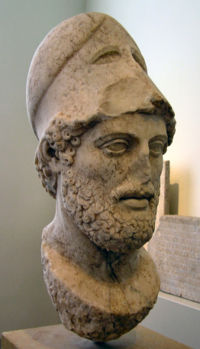 |
Pericles, 495-429 BC, in his funeral oration, lauded the Greeks because they cultivated knowledge without malakia, meaning softness or effeminacy.
Here malakia referred to intellect, not homosexuality.
-Thucydides, The History of the Peloponnesian War, 431 BC, Book Two, Chapter VI.
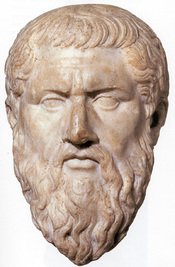 |
Plato, 427-347 BC, in The Republic, has Socrates opine that too much music effeminates a warrior, causing him to be malakoteroi, soft, feeble, sensitive.
Plato expressed an ancient Greek concept, that too much music made a man soft, not homosexual. -Plato, The Republic, 360 BC, Book III.
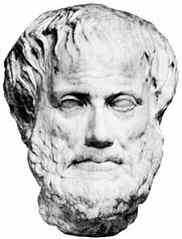 |
Aristotle, 384-322 BC, in Nicomachean Ethics, used malakos to describe lack of restraint and excessive enjoyment of bodily pleasures.
Aristotle wrote: He “who pursues the excesses of things pleasant, and shuns those of things painful, of hunger and thirst and heat and cold and all the objects of touch and taste… that men are called ‘soft’ [malakos] with regard to these pleasures…
Now of appetites and pleasures… with reference to all objects whether of this or of the intermediate kind men are not blamed for being affected by them, for desiring and loving them, but for doing so in a certain way, i.e. for going to excess.” -Aristotle, Nicomachean Ethics, 7.4.4.
Dionysius of Halicarnassus, 60-7 BC, in Roman Antiquities, explains how Aristodemus Malacus, 504 BC, tyrant of Cumae [situated northwest of Naples, the first Greek colony on the Italian mainland], made the male children of Cumae effeminate (meaning soft or womanly, not homosexual), so they would not rise up against him.
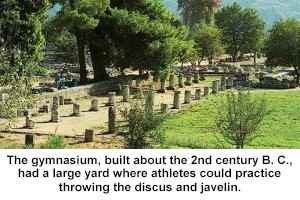 |
In ancient Greek society, a young man’s education involved separation from effeminizing womanly influence.
Young men were educated by older male friends of the family, who taught sports, ethics, fighting and philosophy in the gymnasium.
Aristodemus suppressed the all-male gymnasiums and limited male influence by giving male children into the care of female governesses.
“3 These children, accordingly, forsaking the houses of their fathers, were brought up in the country like slaves, serving the murderers of their fathers. And to the end that no noble or manly spirit might spring up in any of the rest of the citizens, he resolved to make effeminate by means of their upbringing all the youths who were being reared in the city, and with that view he suppressed the gymnasiums and the practice of arms and changed the manner of life previously followed by the children.
4 For he ordered the boys to wear their hair long like the girls, adorn it with flowers, to keep it curled and to bind up the tresses with hair-nets, to wear embroidered robes that reached down to their feet, and, over these, thin and soft mantles, and to pass their lives in the shade.
And when they went to the schools kept by dancing-masters, flute-players and others who, like these, pay court to the Muses, their governesses attended them, taking along parasols and fans; and these women bathed them, carrying into the baths combs, alabaster pots filled with perfumes, and looking-glasses.
5 By such training he continued to enervate the youth till they had completed their twentieth year, and from that time permitted them to be considered as men.”
-Dionysius, Roman Antiquities, Book VII.9.3, p. 172.
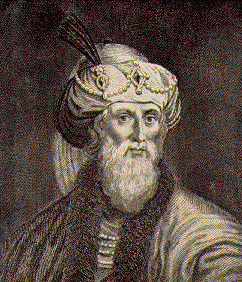 |
Josephus, AD 37-100, used malakos to describe men who appeared soft or weak through lack of courage in battle or who were reluctant to commit suicide in defeat or who enjoyed too much luxury.
This usage does not indicate homosexuality. –Wars of The Jews, 7.338; Antiquities of The Jews, 5.246; 10.194.
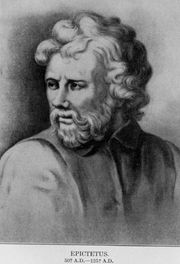 |
Epictetus, AD 55-135, used malakos to refer to soft-headed persons, whom he regarded as unable to absorb true philosophy.
This usage does not indicate homosexuality. -Epictetus, Discourse 3:9.
Dio Chrysostom, AD 40-120, used malakos to refer to those made soft by too much learning.
This usage does not indicate homosexuality. -Dio Chrysostom 49:25.
John The Faster, around AD 575. For centuries, malakia was said to mean masturbation. Use of malakia, with the meaning of masturbation, is attributed to John the Faster around AD 575. The Catholic Church has long interpreted malakia to mean masturbation. -John The Faster, Penitential. This usage does not indicate homosexuality.
Our honest factual
conclusion about malakoi
The citations on this page indicate that the malakos stem was not used by our ancestors as a general reference to gay men and lesbians. When anti-gay conservative Calvinists like Pastor John MacArthur and Phil Johnson support the gay Christian view, that the biblical cultural historical and religious context of 1 Cor 6 was temple prostitution, that is an important admission.
Honest students of the Bible should pay attention to John MacArthur and Phil Johnson on this issue and consider the possibility that malakoi and arsenokoitai described shrine prostitutes who served pagan gods in the idol temples of Corinth. That form of idolatry was a problem for Jews in the Old Testament and Christians in the New Testament.
It is historically inaccurate and factually incorrect to translate the malakos word group to mean homosexual. The evidence indicates that 1 Corinthians 6 is dealing with temple prostitution – even our most ardent foes agree with us about that.
Christian honesty requires non-gay Christians to come clean on this issue. Non-gay Christians must stop wresting 1 Corinthians 6:9 from its context to assault gay and lesbian Christians.
Helpful Links
to make you think
Our eBook, Gay Christian 101
is only $7.99.
Google Translate
into 90 languages

We are saved:
by grace alone through faith alone
Recent Articles


-
Gay Christian 101 – Affirming God’s glorious good news for all LGBs.
Jan 08, 24 12:57 AM
 Gay Lesbian Bisexual Christian 101 – Accurate biblical and historical info defending LGB Christians from the anti-gay crowd.
 -
Romans 1 describes ancient shrine prostitution, not gays and lesbians.
Dec 21, 23 04:37 PM
 Romans 1, in historical context, is about ancient Roman fertility goddess worshipers who engaged in shrine prostitution to worship Cybele, not gays and lesbians.
 -
The Centurion And Pais – When Jesus Blessed A Gay Couple.
Nov 14, 23 10:32 PM
 Centurion and Pais? If Jesus blessed a gay relationship, would this change your view of homosexuality?
Bible Study Resources
for eDisciples